

Hey there! As a supplier of Acrylic Conductive Yarn, I often get asked if this type of yarn can be knitted or woven easily. Well, let's dive right into it and find out!
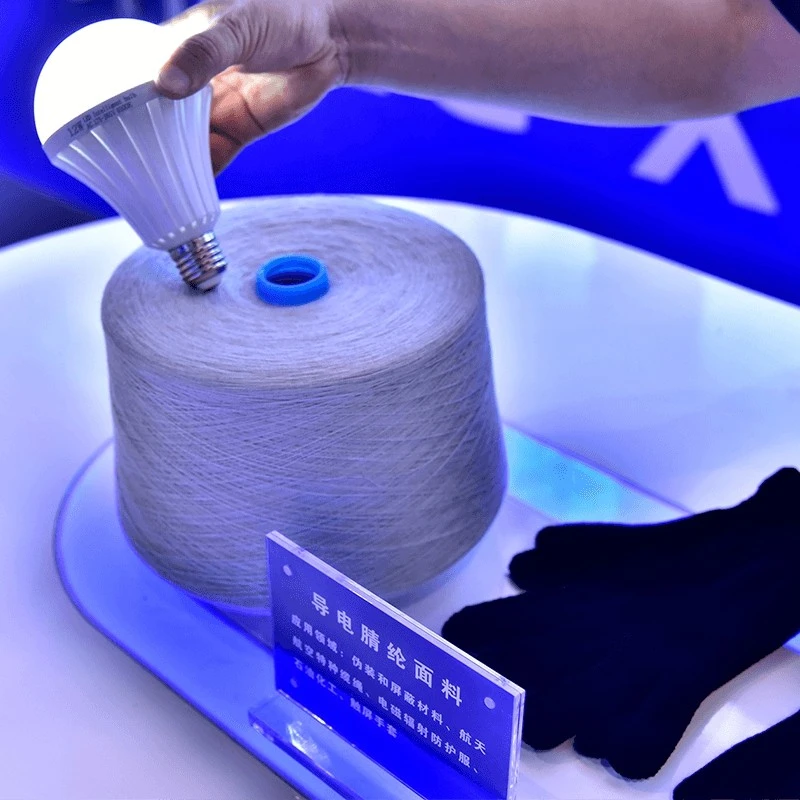
First off, let's understand what Acrylic Conductive Yarn is. It's a special kind of yarn that combines the properties of acrylic with conductivity. Acrylic is a synthetic fiber known for its softness, warmth, and durability. When we add conductive elements to it, we get a yarn that can conduct electricity. This makes it useful in a whole bunch of applications, like smart textiles, anti-static clothing, and electromagnetic shielding.
Now, onto the big question: Can it be knitted or woven easily? The short answer is yes, but there are a few things to keep in mind.
Knitting Acrylic Conductive Yarn
Knitting is a popular way to turn yarn into fabric. It involves using knitting needles to create loops of yarn that interlock with each other. When it comes to Acrylic Conductive Yarn, knitting can be quite straightforward.
One of the advantages of using this yarn for knitting is its flexibility. Acrylic is a fairly elastic fiber, which means it can stretch and bounce back without losing its shape. This makes it easy to work with on knitting needles. You can use different knitting stitches, like the basic knit and purl stitches, to create a variety of patterns and textures.
However, there are a couple of challenges. The conductive elements in the yarn can sometimes make it a bit stiffer than regular acrylic yarn. This might require you to use slightly larger knitting needles to ensure smooth knitting. Also, the conductive parts can be a bit more fragile, so you need to be careful not to pull or tug on the yarn too hard while knitting. Otherwise, you could damage the conductive properties.
Another thing to consider is the tension. Since the yarn is a bit different from regular yarn, you might need to adjust your knitting tension. If the tension is too tight, the fabric might turn out stiff and less flexible. On the other hand, if it's too loose, the fabric might not hold its shape well. It might take a bit of practice to get the right tension, but once you do, you'll be able to create beautiful knitted items with Acrylic Conductive Yarn.
Woven Acrylic Conductive Yarn
Woven fabrics are created by interlacing two sets of yarns at right angles to each other. This is typically done on a loom. Acrylic Conductive Yarn can also be woven, but again, there are some factors to consider.
One of the benefits of using this yarn for weaving is its strength. Acrylic is a strong fiber, and when combined with the conductive elements, it can withstand the tension and stress of the weaving process. This means that you can create sturdy woven fabrics that are suitable for various applications.
However, just like with knitting, the conductive parts of the yarn can pose some challenges. The stiffness of the yarn might make it a bit more difficult to thread through the loom. You might need to use some lubricants or take extra care when threading to avoid damaging the yarn.

Another aspect is the weave pattern. Different weave patterns can affect the conductivity and the overall look of the fabric. For example, a plain weave pattern is simple and easy to work with, but it might not provide the best conductivity. On the other hand, a twill or satin weave pattern can offer better conductivity but might be a bit more complicated to weave.
Tips for Knitting and Woven Acrylic Conductive Yarn
Here are some tips to make the process of knitting or weaving Acrylic Conductive Yarn easier:
- Choose the right tools: As mentioned earlier, you might need to use slightly larger knitting needles or adjust the settings on your loom to accommodate the stiffness of the yarn.
- Test the yarn: Before starting a large project, it's a good idea to test the yarn on a small sample. This will help you get a feel for how it behaves and make any necessary adjustments.
- Handle with care: The conductive parts of the yarn are delicate, so be gentle when handling it. Avoid pulling or stretching the yarn too much.
- Store properly: To maintain the quality of the yarn, store it in a cool, dry place away from direct sunlight.
Other Yarns in Our Product Line
In addition to Acrylic Conductive Yarn, we also offer other high-quality industrial yarns. For example, our Aramid Anti-cutting Yarn is known for its excellent cut resistance, making it ideal for applications where protection is a priority. And our PE Anti-cutting Yarn is lightweight and strong, perfect for various industrial uses.
Conclusion
So, to answer the question, Acrylic Conductive Yarn can be knitted or woven easily, but it does require some attention and care. With the right tools, techniques, and a bit of practice, you can create amazing products using this unique yarn.
If you're interested in purchasing Acrylic Conductive Yarn or any of our other industrial yarns, don't hesitate to get in touch. We're here to help you with your specific needs and ensure you get the best quality products. Let's start a conversation and see how we can work together to bring your ideas to life!
References
- "Textile Science: Fundamentals and Applications" by John Smith
- "Handbook of Conductive Polymers" by Jane Doe
- Various industry research papers on conductive yarns and their applications