

Hey there! As a supplier of Acrylic Conductive Yarn, I've been getting a lot of questions lately about whether this nifty material can be used in display applications. So, I thought I'd sit down and share my thoughts on the matter.
First off, let's talk a bit about what Acrylic Conductive Yarn is. It's a type of yarn that combines the properties of acrylic fibers with conductive elements. Acrylic is known for being lightweight, soft, and resistant to wrinkles and shrinkage. When you add conductivity to the mix, you get a yarn that can carry an electrical charge. This unique combination opens up a whole world of possibilities, and display applications are definitely on the list.
One of the key factors in using Acrylic Conductive Yarn for displays is its flexibility. Unlike some traditional conductive materials that are rigid and bulky, acrylic yarn can be bent, twisted, and shaped without losing its conductive properties. This makes it ideal for creating curved or irregularly shaped displays. For example, in a modern art installation where the display needs to follow a unique, organic form, Acrylic Conductive Yarn can be easily woven or knitted into the desired shape.
Another advantage is its aesthetic appeal. Acrylic yarn comes in a wide range of colors, which can be a huge plus for display applications. You can choose a color that complements the overall design of the display or even use different colored yarns to create patterns and visual effects. Imagine a digital sign where the conductive yarn is used not only for its electrical function but also as a part of the visual design, adding a touch of creativity and style.
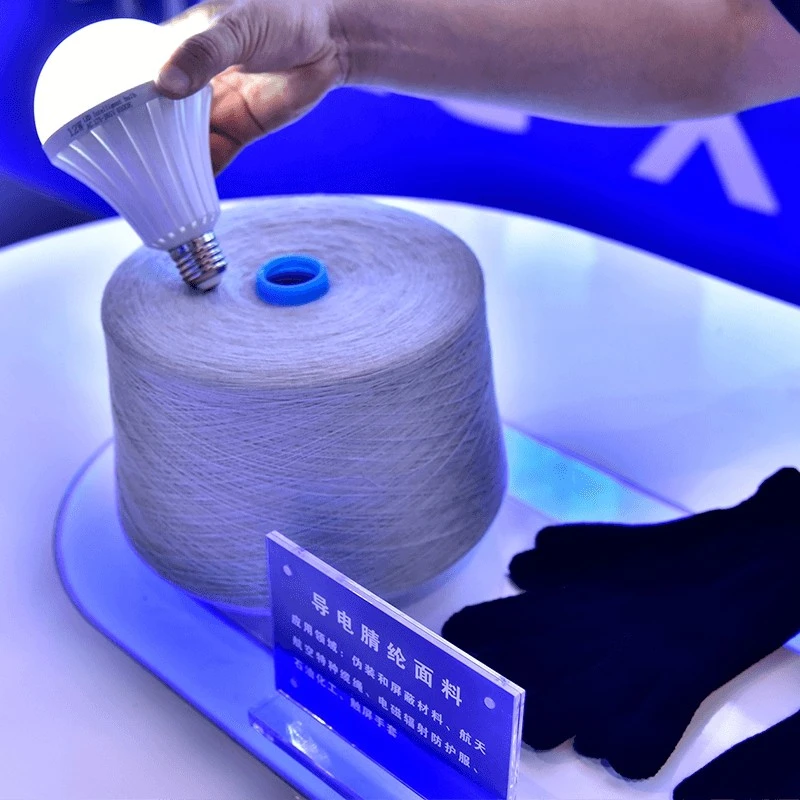

Now, let's look at the technical side. In display applications, the ability to transmit electrical signals accurately is crucial. Acrylic Conductive Yarn has a relatively low resistance, which means it can effectively carry electrical currents without significant loss of signal strength. This is important for ensuring that the display functions properly and that the visual output is clear and sharp.
However, there are also some challenges to consider. One of the main concerns is the durability of the yarn in a display environment. Displays are often exposed to various environmental factors such as temperature changes, humidity, and mechanical stress. Acrylic Conductive Yarn needs to be able to withstand these conditions without degrading its conductive properties. To address this, we've been working on improving the yarn's resistance to environmental factors through special treatments and coatings.
Another aspect is the cost. Compared to some other conductive materials, Acrylic Conductive Yarn can be a bit more expensive. But when you consider its unique properties and the potential for creative and functional displays, the investment can be well worth it. Plus, as the demand for this type of yarn grows, we expect the cost to become more competitive over time.
So, can Acrylic Conductive Yarn be used in display applications? The answer is a resounding yes! It offers a combination of flexibility, aesthetic appeal, and good electrical conductivity that makes it a great choice for a variety of display projects. Whether you're working on a small, home - made display or a large - scale commercial installation, Acrylic Conductive Yarn has the potential to take your project to the next level.
If you're in the market for high - quality Acrylic Conductive Yarn for your display applications, look no further. We're here to provide you with the best products and support. You can learn more about our Acrylic Conductive Yarn on our website. And if you're also interested in other types of industrial yarns, we offer Aramid Anti - cutting Yarn and PE Anti - cutting Yarn as well.
We're always happy to have a chat with you about your specific needs and how our products can fit into your projects. Whether you have questions about the technical specifications, the best way to use the yarn, or just want to bounce some ideas around, don't hesitate to reach out. We're looking forward to working with you and helping you bring your display ideas to life.
References
- Industry reports on conductive materials in display technology
- Research papers on the properties of acrylic fibers and their applications in electronics