

Can industrial yarn be recycled?
As a supplier of industrial yarn, I've often been asked about the recyclability of our products. Industrial yarns are used in a wide range of applications, from textiles and automotive parts to aerospace components. With the growing emphasis on sustainability and environmental responsibility, the question of whether these yarns can be recycled is more relevant than ever.
Types of Industrial Yarn and Their Recycling Potential
Aramid Anti - cutting Yarn
Aramid anti - cutting yarn, such as the one you can find here, is known for its high strength and heat resistance. It is commonly used in protective gloves, safety clothing, and aerospace applications. Recycling aramid yarn is a complex process. Aramid fibers are synthetic polymers with a highly ordered molecular structure, which gives them their excellent properties but also makes them difficult to break down.
However, some recycling methods are being explored. One approach is mechanical recycling, where the yarn is shredded into smaller pieces and then re - spun into new yarn. This method has limitations as the mechanical properties of the recycled yarn may be slightly lower than the original. Another option is chemical recycling, which involves breaking down the polymer chains into their monomers and then re - polymerizing them. This method can produce yarn with properties closer to the original, but it is currently more expensive and energy - intensive.
PE Anti - cutting Yarn
PE (polyethylene) anti - cutting yarn, detailed here, is another popular industrial yarn. Polyethylene is a thermoplastic polymer, which means it can be melted and re - formed. This makes PE anti - cutting yarn relatively easier to recycle compared to aramid yarn.
Mechanical recycling is the most common method for PE yarn. The used yarn is collected, cleaned, and then melted down. The molten polyethylene can be extruded into new yarn or used to make other plastic products. Chemical recycling of PE is also possible, but it is less common due to the high cost and complexity. PE recycling has a significant environmental benefit as it reduces the demand for virgin polyethylene production, which is derived from fossil fuels.
Acrylic Conductive Yarn
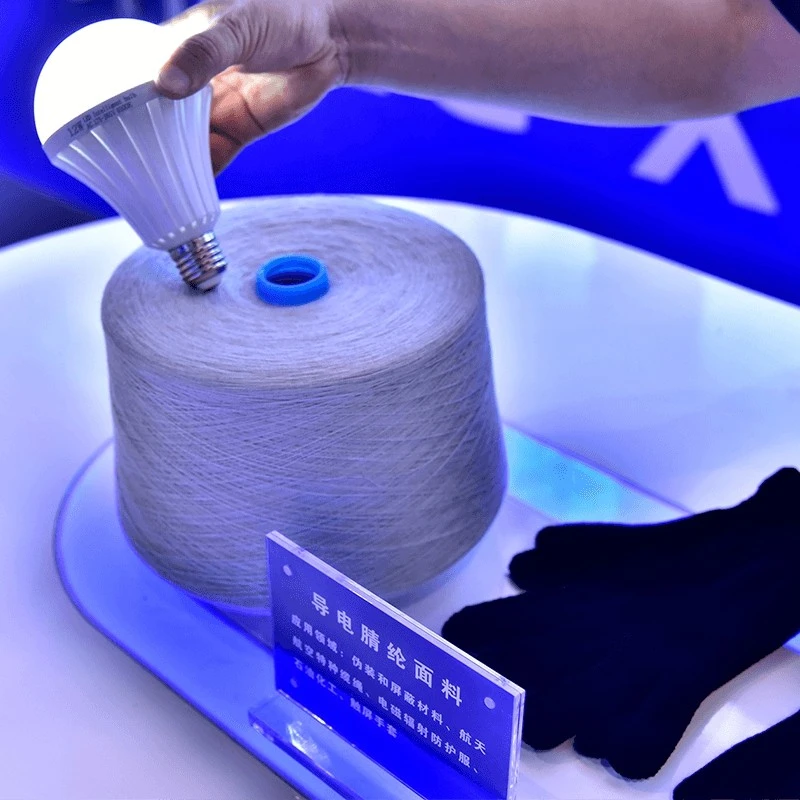
Acrylic conductive yarn, as described here, is used in applications such as smart textiles and electronic devices. Acrylic is a synthetic fiber made from acrylonitrile monomers. Recycling acrylic yarn is challenging because of the presence of additives and the complex manufacturing processes used to make it conductive.
Mechanical recycling of acrylic yarn is difficult because the conductive properties may be lost during the recycling process. Chemical recycling is a more viable option, but it requires specialized equipment and processes. Researchers are working on developing more efficient ways to recycle acrylic conductive yarn, but currently, the recycling rate is relatively low.
Challenges in Industrial Yarn Recycling
One of the main challenges in recycling industrial yarn is the lack of a well - established collection and sorting system. Industrial yarns are often used in complex products, and separating the yarn from other materials can be time - consuming and costly. For example, in a protective glove made of aramid yarn and rubber, separating the two materials requires specialized equipment and processes.
Another challenge is the quality control of recycled yarn. The properties of recycled yarn can vary depending on the recycling method and the quality of the input material. This can make it difficult for manufacturers to use recycled yarn in high - performance applications. Additionally, the cost of recycling is often higher than the cost of producing new yarn from virgin materials, which discourages many companies from investing in recycling technologies.
Benefits of Industrial Yarn Recycling
Despite the challenges, there are several benefits to recycling industrial yarn. From an environmental perspective, recycling reduces the amount of waste sent to landfills and incinerators. It also conserves natural resources by reducing the demand for virgin materials. For example, recycling PE yarn reduces the need for crude oil, which is used to produce polyethylene.
Recycling industrial yarn can also have economic benefits. As the demand for sustainable products increases, companies that can offer recycled yarn may gain a competitive advantage in the market. Additionally, recycling can create jobs in the recycling and waste management sectors.
Future Outlook
The future of industrial yarn recycling looks promising. With the increasing focus on sustainability and the development of new recycling technologies, the recycling rate of industrial yarn is expected to increase. Governments and industry associations are also playing a role by implementing policies and initiatives to promote recycling.
For example, some governments are providing incentives for companies to invest in recycling technologies, while industry associations are working on developing standards and best practices for industrial yarn recycling. Researchers are also exploring new ways to improve the recycling process, such as using enzymes to break down polymers more efficiently.
Conclusion
In conclusion, while the recyclability of industrial yarn varies depending on the type of yarn, there are opportunities for recycling in all cases. Aramid, PE, and acrylic yarns each present their own challenges and opportunities, but with continued research and development, the recycling rate of these yarns is likely to improve.
As a supplier of industrial yarn, I am committed to promoting sustainability and exploring ways to make our products more recyclable. We are working with our customers and partners to develop solutions that reduce the environmental impact of our products.
If you are interested in purchasing industrial yarn or have any questions about our products and their recyclability, please feel free to contact us for a detailed discussion and potential procurement. We look forward to working with you to meet your industrial yarn needs in a sustainable way.

References
- "Recycling of Synthetic Fibers: A Review" - Journal of Textile Science and Engineering
- "Sustainable Textile Recycling: Technologies and Challenges" - International Journal of Recycling of Materials
- "Advances in Polymer Recycling" - Polymer Science and Technology Journal