

Hey there! As a high strength yarn supplier, I've often been asked how high strength yarn stacks up against glass fiber yarn when it comes to strength. It's a pretty hot topic, and today, I'm gonna break it down for you.
First off, let's talk a bit about what high strength yarn is. There are different types, like PPS High Strength Yarn, Aramid High Strength Yarn, and Acrylic High Strength Yarn. These yarns are designed to have excellent strength properties, which make them super useful in a whole bunch of industries.
Now, glass fiber yarn is no slouch either. It's made from extremely fine fibers of glass, and it's well - known for its high tensile strength. But how does it compare to high strength yarn?
Tensile Strength
Tensile strength is basically the maximum amount of pulling force a material can take before it breaks. High strength yarns, especially aramid ones, are absolute beasts in this department. Aramid high strength yarn has an incredibly high tensile strength - it can withstand a huge amount of pulling force without snapping. For example, in applications like bullet - proof vests, aramid yarn is used because it can stop high - velocity projectiles.
On the other hand, glass fiber yarn also has good tensile strength. It's often used in applications where high strength and stiffness are required, like in the aerospace industry for making parts of airplanes. However, when you compare it directly to aramid high strength yarn, aramid usually wins out in terms of pure tensile strength.
PPS high strength yarn also has a decent tensile strength. It's more resistant to chemicals and heat compared to some other materials. In environments where there are harsh chemicals present, PPS yarn can maintain its strength better than glass fiber yarn, which might get damaged by certain chemicals over time.

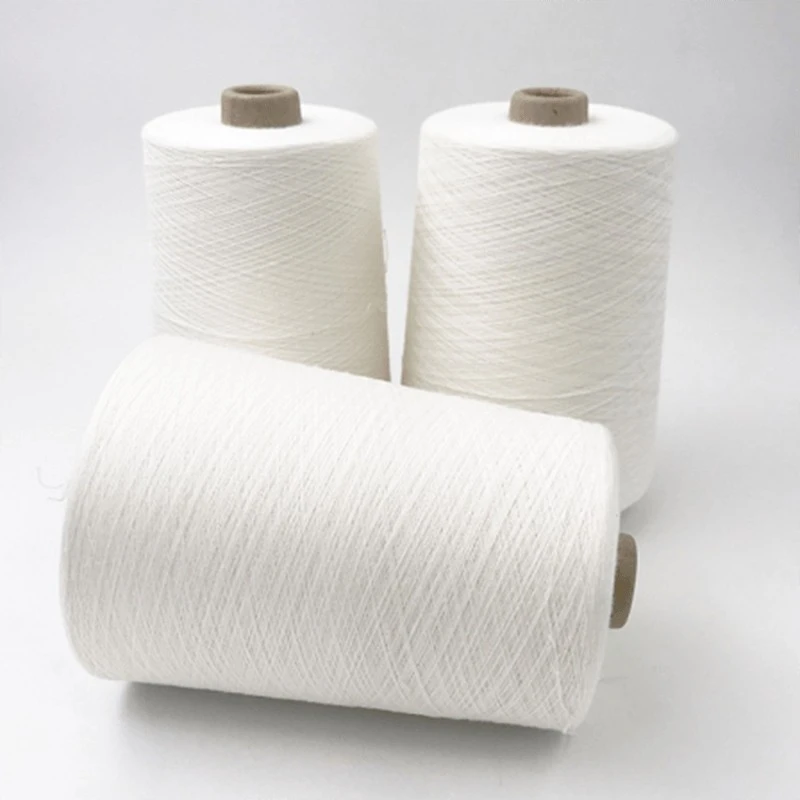
Acrylic high strength yarn has a different set of properties. While its tensile strength might not be as high as aramid or some types of glass fiber yarn, it has good elasticity. This means it can stretch a bit without breaking and then return to its original shape. This property can be really useful in applications where a bit of flexibility is needed along with some level of strength.
Flexibility and Bendability
High strength yarns, especially acrylic ones, are generally more flexible than glass fiber yarn. Glass fiber is quite brittle and can break if it's bent too much. This lack of flexibility can be a drawback in some applications. For instance, in textile products where the material needs to be sewn or shaped into different forms, high strength yarn is a better choice.
Aramid high strength yarn, although very strong, also has some degree of flexibility. It can be woven into fabrics easily, which is why it's used in so many textile - based applications. PPS high strength yarn is also relatively flexible compared to glass fiber, and it can be used in applications where the material needs to be manipulated during the manufacturing process.
Impact Resistance
When it comes to impact resistance, high strength yarns shine. Aramid yarn, as I mentioned earlier, is used in bullet - proof vests because it can absorb and disperse the energy of an impact. Glass fiber yarn, while strong in terms of static tensile strength, doesn't handle impacts as well. A sudden impact can cause the glass fibers to shatter, reducing the overall strength of the material.
Acrylic high strength yarn also has good impact resistance. Its ability to stretch and absorb energy makes it suitable for applications where the material might be subjected to sudden impacts. PPS high strength yarn has some level of impact resistance, especially in environments where it's protected from extreme heat and chemicals that could weaken it.
Cost - effectiveness
Cost is always a factor in any manufacturing process. Glass fiber yarn is generally less expensive to produce compared to high strength yarns, especially aramid ones. Aramid high strength yarn is quite costly because of the complex manufacturing process and the high - performance raw materials used.
However, when you consider the long - term cost, high strength yarn can sometimes be more cost - effective. For example, PPS high strength yarn's resistance to chemicals and heat means it can last longer in harsh environments, reducing the need for frequent replacements. Acrylic high strength yarn's flexibility and ease of use can also lead to cost savings in the manufacturing process, as it's easier to work with compared to glass fiber.
Chemical Resistance
High strength yarns like PPS have excellent chemical resistance. They can withstand exposure to a wide range of chemicals without losing their strength. Glass fiber yarn, on the other hand, can be affected by certain chemicals. For example, strong acids or alkalis can etch the surface of glass fibers, reducing their strength over time.
Aramid high strength yarn also has good chemical resistance, although it might not be as resistant as PPS in some extreme chemical environments. Acrylic high strength yarn has moderate chemical resistance, which is sufficient for many common applications.
Heat Resistance
PPS high strength yarn is a champion when it comes to heat resistance. It can withstand high temperatures without melting or losing its strength. Glass fiber yarn also has good heat resistance, but PPS can often handle higher temperatures for longer periods.
Aramid high strength yarn has decent heat resistance, but it might start to degrade at very high temperatures. Acrylic high strength yarn has the lowest heat resistance among these materials, but it's still suitable for applications where the temperature doesn't get too extreme.
Applications
The differences in strength and other properties mean that high strength yarn and glass fiber yarn are used in different applications. High strength yarns are commonly used in the textile industry for making protective clothing, ropes, and nets. They're also used in the automotive industry for making seat belts and airbags.
Glass fiber yarn is mainly used in industries where high stiffness and high temperature resistance are required, such as the aerospace and construction industries. It's used to make composites, insulation materials, and structural components.
In conclusion, high strength yarn and glass fiber yarn both have their own strengths and weaknesses. High strength yarn offers better flexibility, impact resistance, and in some cases, chemical and heat resistance. Glass fiber yarn, on the other hand, is more cost - effective in terms of raw material cost and has high static tensile strength.
If you're in the market for a material that needs to be flexible, impact - resistant, and resistant to chemicals and heat, high strength yarn is the way to go. And if you're looking for something that's stiff, has high static strength, and is relatively inexpensive, glass fiber yarn might be a better choice.
If you're interested in learning more about our high strength yarn products or have any questions about which type of yarn would be best for your application, feel free to reach out. We're here to help you make the right choice for your manufacturing needs.
References
- Textile Materials Handbook: Properties, Performance, and Applications
- Composites Manufacturing: Processes, Materials, and Applications
- High - Performance Fibers: Technology, Properties, and Applications