

When it comes to protective yarns, PE Anti - cutting Yarn has emerged as a popular choice in various industries. One question that frequently arises is how this yarn performs in wet conditions. As a supplier of PE Anti - cutting Yarn, I have in - depth knowledge and experience regarding its performance under different circumstances, including wet environments.
Physical and Chemical Properties of PE Anti - cutting Yarn
To understand how PE Anti - cutting Yarn behaves in wet conditions, we first need to look at its basic physical and chemical properties. PE, or polyethylene, is a thermoplastic polymer. The anti - cutting yarn is made from high - performance polyethylene fibers which are known for their high strength - to - weight ratio. These fibers are highly resistant to abrasion and have excellent cut - resistance capabilities.
In normal, dry conditions, the high - density polyethylene molecules are arranged in a way that provides a strong and stable structure. The yarn can withstand significant forces without breaking or fraying, making it ideal for applications where protection against cuts is required, such as in gloves for industrial workers.
Impact of Water on PE Anti - cutting Yarn
When PE Anti - cutting Yarn is exposed to water, several things can happen. First of all, water can act as a lubricant on the surface of the yarn. In some cases, this might reduce the friction between the yarn and the cutting object. For example, in a wet environment where a worker is handling sharp tools, the reduced friction could potentially lead to a slightly different cutting experience.
However, the cut - resistance of PE Anti - cutting Yarn does not degrade significantly in wet conditions. The high - strength polyethylene fibers are hydrophobic, which means they repel water. This property helps to maintain the integrity of the yarn's structure even when it is wet. The hydrophobic nature prevents water from penetrating deep into the fiber structure and causing swelling or other forms of damage that could compromise the cut - resistance.
Testing and Performance Data
Over the years, we have conducted numerous tests to evaluate the performance of PE Anti - cutting Yarn in wet conditions. In our laboratory, we simulate real - world scenarios where the yarn is exposed to water for extended periods and then subjected to cutting forces.
The results of these tests have shown that the yarn maintains a high level of cut - resistance even after being soaked in water. The cut - protection level, as measured by standardized testing methods, remains relatively stable. For instance, a glove made from our PE Anti - cutting Yarn that has a cut - level 5 rating in dry conditions will still offer a very high level of protection, close to cut - level 5, when wet.
Comparison with Other Yarns in Wet Conditions
It is also interesting to compare the performance of PE Anti - cutting Yarn with other types of anti - cutting yarns in wet conditions. Take Aramid Anti - cutting Yarn for example. Aramid fibers are also known for their high strength and cut - resistance. However, aramid yarns are more hydrophilic than PE yarns. This means that they absorb water more readily. When aramid yarns absorb water, they can swell, which may lead to a change in their mechanical properties and potentially a reduction in cut - resistance.
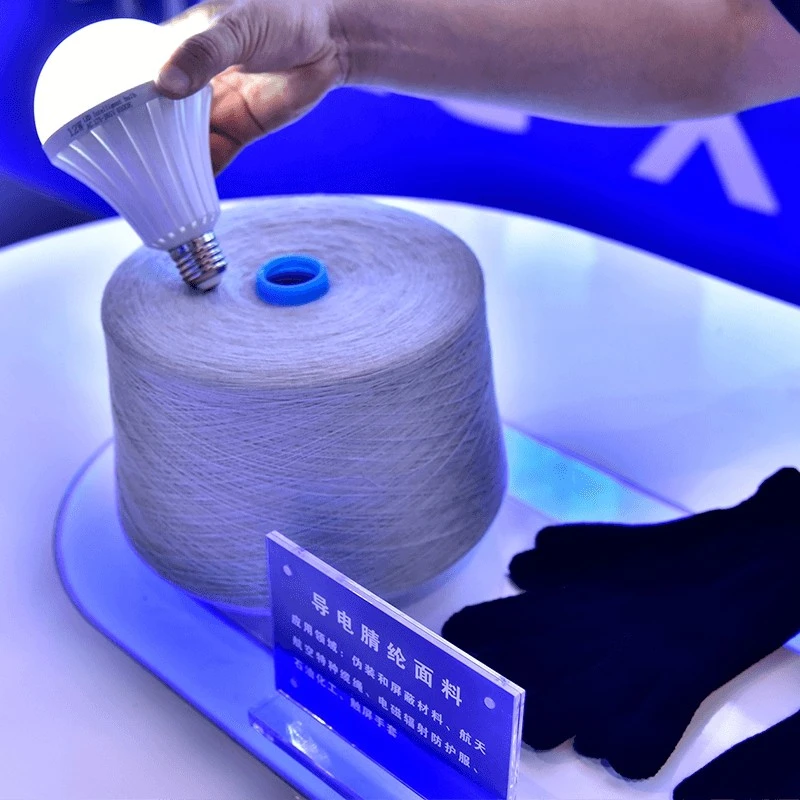
On the other hand, Acrylic Conductive Yarn is mainly designed for applications where conductivity is required. While it may have some level of cut - resistance, its performance in wet conditions is not as optimized for cut - protection as PE Anti - cutting Yarn. The acrylic fibers can be affected by water, and their cut - resistance may decrease more significantly compared to PE yarn.

Applications in Wet Environments
Given its excellent performance in wet conditions, PE Anti - cutting Yarn has a wide range of applications in industries where workers are often exposed to wet environments. In the fishing industry, for example, fishermen need gloves that can protect their hands from sharp fish bones and fishing equipment. Our PE Anti - cutting Yarn gloves are perfect for this application as they can maintain their cut - resistance even when constantly wet from seawater.
In the food processing industry, workers handle sharp knives and other cutting tools while working in wet areas. Gloves made from PE Anti - cutting Yarn provide reliable protection, ensuring the safety of the workers.
Maintenance and Long - term Performance in Wet Conditions
To ensure the long - term performance of PE Anti - cutting Yarn products in wet conditions, proper maintenance is essential. After use in a wet environment, it is recommended to dry the yarn - based products thoroughly. This helps to prevent the growth of mold and bacteria, which could potentially damage the yarn over time.
Regular inspection of the products is also important. Although the yarn's cut - resistance remains high in wet conditions, physical damage such as cuts or abrasions can still occur. If any damage is detected, the product should be replaced to ensure continuous protection.
Conclusion
In conclusion, PE Anti - cutting Yarn performs exceptionally well in wet conditions. Its hydrophobic nature allows it to maintain its cut - resistance, making it a reliable choice for industries where workers face wet and cutting - hazard environments. Compared to other types of anti - cutting yarns, it offers better stability in wet conditions.
If you are in need of high - quality anti - cutting solutions, especially for wet environments, our PE Anti - cutting Yarn is the ideal choice. We are committed to providing the best products and services to meet your specific needs. Contact us for more information and to start a procurement discussion.
References
- ASTM International. Standard test methods for cut resistance of materials used in protective clothing. ASTM F1790 - 18.
- European Committee for Standardization. EN 388:2016 Protective gloves against mechanical risks.