

Hey there! As a supplier of linen viscose fabric, I've been getting a lot of questions lately about how to enhance the drape of this amazing material. So, I thought I'd put together this blog post to share some tips and tricks that I've learned over the years.
First off, let's talk about what drape is and why it's important. Drape refers to the way a fabric falls and hangs. A fabric with good drape will flow smoothly and gracefully, creating a flattering silhouette. On the other hand, a fabric with poor drape will look stiff and unflattering.
When it comes to linen viscose fabric, achieving the right drape can be a bit tricky. Linen is a natural fiber that is known for its strength and durability, but it can also be quite stiff. Viscose, on the other hand, is a semi-synthetic fiber that is known for its softness and drape. By combining these two fibers, we get a fabric that has the best of both worlds: the strength and durability of linen, and the softness and drape of viscose.
So, how can we enhance the drape of linen viscose fabric? Here are some tips:
1. Choose the Right Blend
The first step in enhancing the drape of linen viscose fabric is to choose the right blend. Generally speaking, the higher the percentage of viscose in the blend, the better the drape will be. However, it's important to find a balance between the two fibers. Too much viscose can make the fabric too soft and prone to stretching, while too much linen can make the fabric too stiff.
As a supplier, I recommend a blend of 60% viscose and 40% linen. This blend offers a good balance between the two fibers, providing a fabric that is both strong and durable, and has a beautiful drape. You can check out our Breathable Linen Viscose Dyed Fabric and Soft Linen Viscose Dyed Fabric, which are made with this ideal blend.
2. Pre-Wash the Fabric
Another way to enhance the drape of linen viscose fabric is to pre-wash it. Pre-washing the fabric helps to soften the fibers and remove any stiffness. It also helps to shrink the fabric, which can improve the drape.
To pre-wash the fabric, simply machine wash it in cold water with a gentle detergent. Avoid using fabric softener, as this can leave a residue on the fabric and affect the drape. After washing, hang the fabric to dry. Do not put it in the dryer, as this can cause the fabric to shrink too much and become too stiff.
3. Use a Fabric Softener
If you want to further enhance the drape of the fabric, you can use a fabric softener. However, it's important to choose the right fabric softener. Look for a fabric softener that is specifically designed for natural and semi-synthetic fibers. Avoid using fabric softeners that contain silicone or other chemicals, as these can leave a residue on the fabric and affect the drape.
To use the fabric softener, simply add it to the rinse cycle of your washing machine. Follow the instructions on the bottle for the correct amount to use. After washing, hang the fabric to dry.
4. Iron the Fabric
Ironing the fabric can also help to enhance the drape. Ironing helps to smooth out the fibers and remove any wrinkles, which can improve the flow of the fabric.
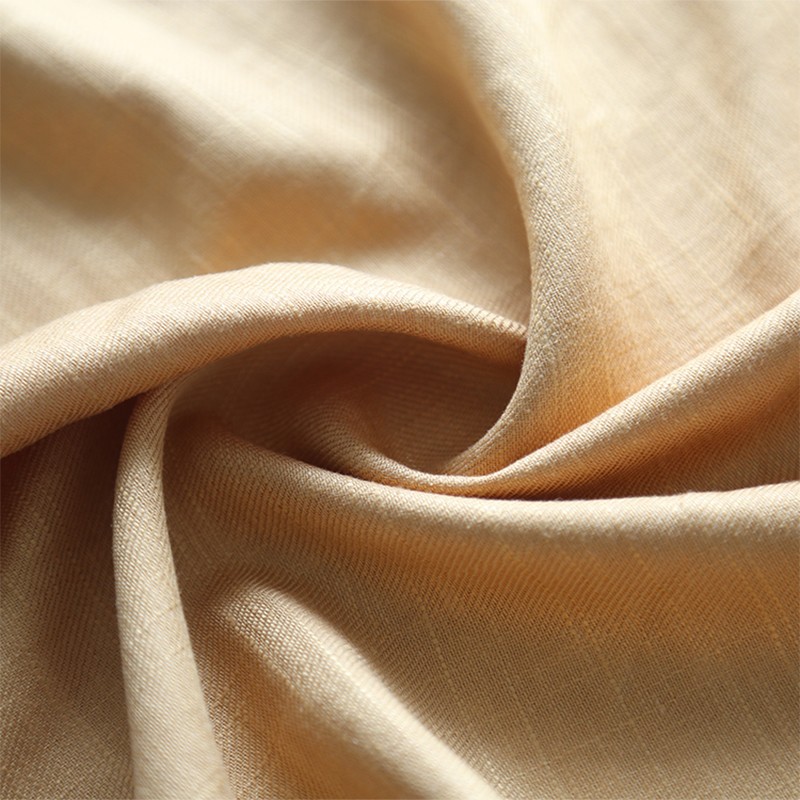

To iron the fabric, set your iron to a low or medium heat setting. Use a pressing cloth to protect the fabric from direct contact with the iron. Start by ironing the back of the fabric, then flip it over and iron the front. Do not iron the fabric while it is wet, as this can cause the fabric to shrink and become too stiff.
5. Choose the Right Weave
The weave of the fabric can also affect the drape. Generally speaking, fabrics with a looser weave will have a better drape than fabrics with a tighter weave. This is because a looser weave allows the fibers to move more freely, which creates a more fluid flow.
As a supplier, I recommend choosing a fabric with a twill weave. Twill weaves are known for their diagonal pattern and their ability to drape well. You can check out our Linen Viscose Twill Fabric, which has a beautiful drape and is perfect for a variety of applications.
6. Consider the Weight of the Fabric
The weight of the fabric can also affect the drape. Generally speaking, lighter weight fabrics will have a better drape than heavier weight fabrics. This is because lighter weight fabrics are more flexible and can move more freely.
When choosing a linen viscose fabric, consider the weight of the fabric based on your intended use. If you're making a garment that requires a lot of movement, such as a dress or a skirt, choose a lighter weight fabric. If you're making a garment that requires more structure, such as a suit or a jacket, choose a heavier weight fabric.
7. Store the Fabric Properly
Finally, it's important to store the fabric properly to maintain its drape. Avoid folding the fabric tightly or storing it in a cramped space, as this can cause the fabric to crease and lose its drape. Instead, roll the fabric and store it in a cool, dry place.
In conclusion, enhancing the drape of linen viscose fabric is all about finding the right balance between the two fibers, choosing the right blend, pre-washing and softening the fabric, ironing it properly, choosing the right weave and weight, and storing it properly. By following these tips, you can achieve a fabric that has a beautiful drape and looks great in any application.
If you're interested in purchasing our linen viscose fabric, or if you have any questions about enhancing the drape of the fabric, please feel free to contact us. We'd be happy to help you find the perfect fabric for your needs and provide you with any additional information you may need.
References
- Textile Institute. (2019). Handbook of Textile Fibre Structure. Woodhead Publishing.
- Lewin, M., & Sello, S. B. (Eds.). (1998). Handbook of Fiber Chemistry. CRC Press.