

As an industrial yarn supplier, I've witnessed firsthand the diverse needs and applications of industrial yarns across various industries. Knitting is one of the most common methods of using industrial yarn, and different knitting techniques are suitable for different types of industrial yarn. In this blog, I'll explore the knitting techniques that are well - suited for industrial yarn and discuss how they can optimize the performance of your end - products.
Understanding Industrial Yarns
Before delving into the knitting techniques, it's essential to understand the characteristics of industrial yarns. Industrial yarns are designed to meet specific performance requirements, such as high strength, heat resistance, chemical resistance, and conductivity. Some of the popular industrial yarns include Acrylic Conductive Yarn, PE Anti - cutting Yarn, and Aramid Anti - cutting Yarn.
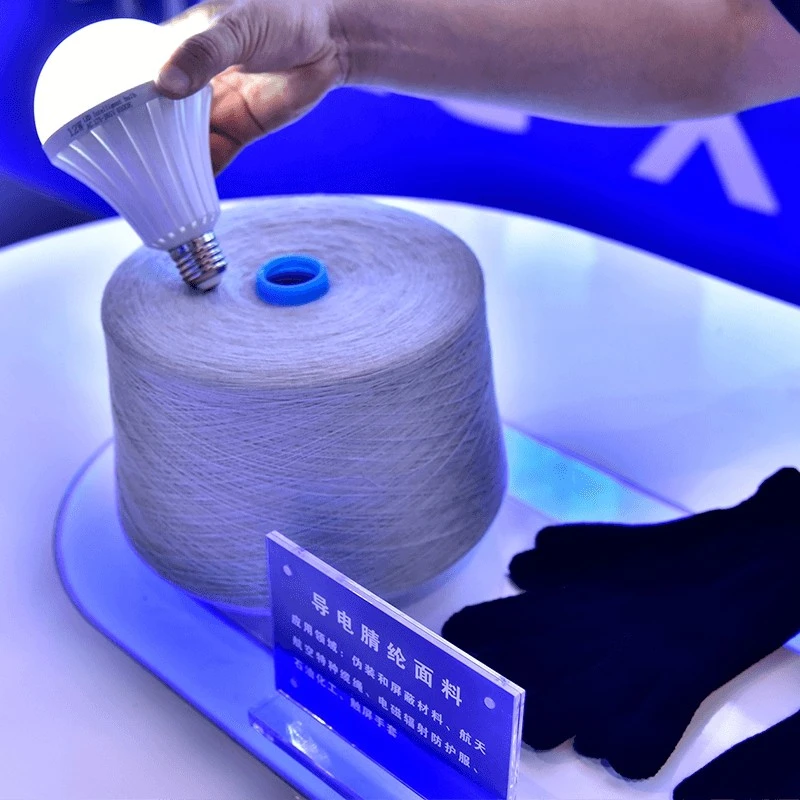
Acrylic Conductive Yarn is a specialized yarn that combines the properties of acrylic fibers with electrical conductivity. It is often used in applications where static electricity needs to be dissipated, such as in the electronics and automotive industries. PE Anti - cutting Yarn, made from high - performance polyethylene fibers, offers excellent cut resistance, making it ideal for protective gloves and clothing in industries like construction and manufacturing. Aramid Anti - cutting Yarn, derived from aramid fibers, is known for its high strength, heat resistance, and cut resistance, commonly used in aerospace, military, and high - end protective gear.
Knitting Techniques for Industrial Yarn
Weft Knitting
Weft knitting is one of the most widely used knitting techniques for industrial yarn. In weft knitting, the yarn is fed horizontally across the fabric, creating loops in a row - by - row manner. This technique is highly versatile and can produce a wide range of fabric structures, from simple single - jersey to complex rib and interlock fabrics.
For industrial yarns like Acrylic Conductive Yarn, weft knitting can be used to create flexible and stretchable conductive fabrics. The loops in weft - knitted fabrics allow the yarn to move and stretch without breaking the conductive path, making it suitable for applications where the fabric needs to conform to different shapes.
When using PE Anti - cutting Yarn or Aramid Anti - cutting Yarn in weft knitting, the resulting fabric can be used to make form - fitting protective gloves. The stretchability of weft - knitted fabrics ensures a snug fit, while the high - strength yarns provide excellent cut resistance.
Warp Knitting
Warp knitting is another important technique for industrial yarn. In warp knitting, multiple yarns are fed vertically along the length of the fabric, creating a series of interlocking loops. Warp - knitted fabrics are known for their stability, dimensional accuracy, and high production speed.

For industrial applications, warp knitting is often used with high - strength industrial yarns. For example, when using Aramid Anti - cutting Yarn in warp knitting, the resulting fabric can be used in high - performance protective clothing. The stable structure of warp - knitted fabrics ensures that the aramid fibers are evenly distributed, providing consistent cut resistance across the fabric.
Warp knitting can also be used to produce technical textiles with specific properties. For instance, by using Acrylic Conductive Yarn in warp knitting, we can create large - scale conductive fabrics for use in electromagnetic shielding applications. The parallel arrangement of the yarns in warp - knitted fabrics allows for efficient conduction of electricity, making it suitable for applications where a large surface area needs to be covered.
Circular Knitting
Circular knitting is a variation of weft knitting that produces seamless tubular fabrics. In circular knitting, the yarn is fed into a circular knitting machine, which creates a continuous tube of fabric. This technique is commonly used in the production of hosiery, sweaters, and some types of industrial fabrics.
When it comes to industrial yarns, circular knitting can be used to produce seamless protective sleeves. For example, PE Anti - cutting Yarn can be circular - knitted into sleeves that provide full - coverage protection for the arms. The seamless construction eliminates the need for seams, which can be weak points in the fabric and reduce the overall cut resistance.
Circular knitting can also be used with Acrylic Conductive Yarn to create seamless conductive tubes. These tubes can be used in applications such as cable shielding, where a continuous conductive path is required.
Factors to Consider When Choosing Knitting Techniques
When selecting a knitting technique for industrial yarn, several factors need to be considered.
Yarn Properties
The properties of the industrial yarn, such as its strength, flexibility, and conductivity, play a crucial role in determining the suitable knitting technique. For example, highly flexible yarns are more suitable for weft knitting, while high - strength and less flexible yarns may be better suited for warp knitting.
End - Use Application
The intended application of the knitted fabric also influences the choice of knitting technique. If the fabric needs to be stretchable and conformable, weft knitting or circular knitting may be more appropriate. On the other hand, if the fabric needs to have high stability and dimensional accuracy, warp knitting may be the better choice.
Production Requirements
Production speed, cost, and quality requirements are also important factors. Warp knitting generally offers higher production speeds compared to weft knitting, making it more suitable for large - scale production. However, weft knitting may be more cost - effective for small - batch production or when a high degree of flexibility in fabric design is required.
Optimizing Knitting Performance with Industrial Yarn
To ensure the best performance of industrial yarn in knitting, several measures can be taken.
Yarn Preparation
Proper yarn preparation is essential. This includes processes such as sizing, which can improve the yarn's handling properties and reduce breakage during knitting. For example, for Aramid Anti - cutting Yarn, a suitable sizing agent can be applied to reduce the friction between the yarn and the knitting needles, improving the knitting efficiency.
Machine Settings
Adjusting the knitting machine settings according to the properties of the industrial yarn is crucial. This includes adjusting the tension, stitch length, and needle size. For example, when using PE Anti - cutting Yarn, the tension should be carefully adjusted to ensure that the yarn is not over - stretched or under - tensioned, which can affect the quality of the knitted fabric.
Quality Control
Implementing strict quality control measures during the knitting process is necessary to ensure the consistency and quality of the final product. This includes regular inspection of the knitted fabric for defects such as broken yarns, uneven stitches, and poor dimensional stability.
Conclusion
In conclusion, different knitting techniques, including weft knitting, warp knitting, and circular knitting, offer unique advantages for industrial yarns. The choice of knitting technique depends on the properties of the industrial yarn, the end - use application, and the production requirements. As an industrial yarn supplier, I'm committed to providing high - quality yarns and sharing our expertise in knitting techniques to help our customers create innovative and high - performance products.
If you're interested in learning more about our industrial yarns or discussing the best knitting techniques for your specific application, I encourage you to reach out to us. We're here to assist you in finding the perfect solution for your knitting needs.
References
- "Knitting Technology" by A. R. Peirce
- "Industrial Yarns and Their Applications" by P. K. Choudhury
- Technical literature provided by leading industrial yarn manufacturers.