

Hey there! As an industrial yarn supplier, I often get asked about the specifications of industrial yarn used in tires. It's a super interesting topic, and I'm excited to share all the details with you.
First off, let's talk about why industrial yarn is so important in tire manufacturing. Tires need to be strong, durable, and able to withstand a lot of stress. Industrial yarn plays a crucial role in providing the necessary strength and stability to the tire structure. It helps to reinforce the rubber, prevent punctures, and improve the overall performance of the tire.
Now, let's dive into the different types of industrial yarn used in tires and their specifications.
Nylon Yarn
Nylon is one of the most commonly used industrial yarns in tire manufacturing. It's known for its high strength, excellent abrasion resistance, and good fatigue resistance. Nylon yarn can withstand high temperatures and is also resistant to chemicals and oils.
- Tensile Strength: Nylon yarn used in tires typically has a high tensile strength, which means it can withstand a lot of pulling force without breaking. The tensile strength of nylon yarn can range from 5 to 10 grams per denier (g/d), depending on the specific application.
- Elongation at Break: Another important specification of nylon yarn is its elongation at break. This refers to the amount of stretching the yarn can undergo before it breaks. Nylon yarn used in tires usually has an elongation at break of around 15% to 30%.
- Heat Resistance: Tires generate a lot of heat during operation, so the industrial yarn used in them needs to be able to withstand high temperatures. Nylon yarn has good heat resistance and can maintain its strength and properties even at elevated temperatures.
Polyester Yarn
Polyester yarn is another popular choice for tire reinforcement. It offers similar properties to nylon, such as high strength and good abrasion resistance, but it also has some unique advantages.
- Low Shrinkage: Polyester yarn has a relatively low shrinkage rate, which means it retains its shape and dimensions better than nylon. This is important in tire manufacturing, as it helps to maintain the tire's shape and stability.
- Chemical Resistance: Polyester yarn is resistant to many chemicals, including acids and alkalis. This makes it suitable for use in tires that may come into contact with various chemicals during their lifespan.
- Moisture Resistance: Unlike nylon, polyester yarn is not affected by moisture. It does not absorb water, which helps to prevent the growth of mold and mildew and maintains the yarn's strength and performance.
The tensile strength of polyester yarn used in tires is similar to that of nylon, ranging from 5 to 10 g/d. The elongation at break is typically around 20% to 40%.
Steel Cord
Steel cord is a type of industrial yarn made from high-strength steel wires. It is used in the belts and carcass of tires to provide additional strength and stiffness.
- High Tensile Strength: Steel cord has an extremely high tensile strength, much higher than nylon or polyester yarn. It can withstand very high loads and is essential for the structural integrity of the tire.
- Low Elongation: Steel cord has a very low elongation at break, which means it does not stretch much under load. This helps to maintain the shape of the tire and improve its handling and stability.
- Corrosion Resistance: To prevent corrosion, steel cord is usually coated with a layer of brass or other protective materials. This helps to extend the lifespan of the tire and maintain the performance of the steel cord.
Aramid Yarn
Aramid yarn, such as Aramid Anti - cutting Yarn, is a high-performance industrial yarn known for its exceptional strength and heat resistance. It is used in high - performance tires, such as those for racing cars and aircraft.

- Ultra - High Tensile Strength: Aramid yarn has a very high tensile strength, often exceeding 20 g/d. This makes it one of the strongest industrial yarns available.
- Heat Resistance: Aramid yarn can withstand extremely high temperatures without losing its strength. It has a high melting point and can maintain its properties even in harsh environments.
- Cut Resistance: As the name suggests, aramid anti - cutting yarn is highly resistant to cuts and abrasions. This property is beneficial in tires that may encounter sharp objects on the road.
PE Yarn
Polyethylene (PE) yarn, like PE Anti - cutting Yarn, is also used in some specialized tires.
- Lightweight: PE yarn is very lightweight, which can help to reduce the overall weight of the tire. This can improve fuel efficiency and performance.
- High Strength - to - Weight Ratio: Despite its low weight, PE yarn has a high strength - to - weight ratio. It can provide good reinforcement while keeping the tire light.
- Cut and Abrasion Resistance: PE anti - cutting yarn offers good resistance to cuts and abrasions, making it suitable for tires that need to withstand rough conditions.
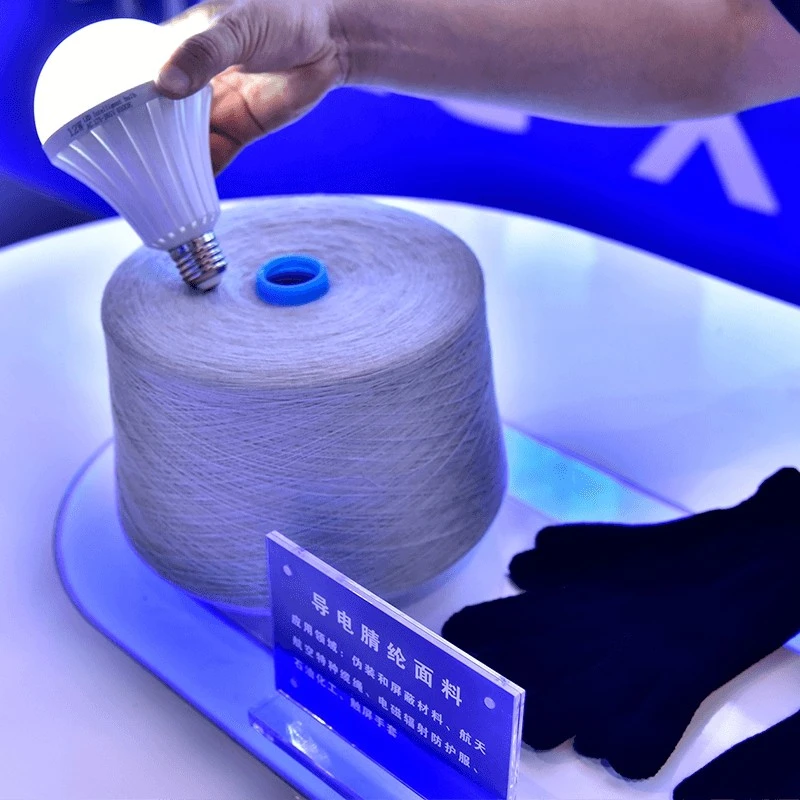
Acrylic Conductive Yarn
Acrylic Conductive Yarn is a unique type of industrial yarn that can be used in tires for specific applications.
- Conductivity: The main feature of acrylic conductive yarn is its ability to conduct electricity. This can be useful in tires for applications where static electricity needs to be dissipated, such as in some industrial or military vehicles.
- Flexibility: Acrylic conductive yarn is relatively flexible, which allows it to be easily incorporated into the tire structure without affecting its performance.
When it comes to choosing the right industrial yarn for tire manufacturing, several factors need to be considered. These include the type of tire (e.g., passenger car tire, truck tire, racing tire), the intended use of the tire (e.g., on - road, off - road), and the performance requirements (e.g., strength, durability, heat resistance).
As an industrial yarn supplier, I understand the importance of providing high - quality yarn that meets the specific needs of tire manufacturers. We offer a wide range of industrial yarns, including nylon, polyester, steel cord, aramid, PE, and acrylic conductive yarn, with various specifications to suit different applications.
If you're in the tire manufacturing industry and are looking for reliable industrial yarn suppliers, I'd love to have a chat with you. Whether you need help choosing the right yarn for your tires or have any questions about our products, feel free to reach out. We're here to support you in creating high - performance tires that meet the highest standards.
References
- "Tire Engineering and Manufacture" by J. Y. Lee
- "Handbook of Fiber Science and Technology" edited by Mark Lewin and Edward M. Pearce