

Linen spandex fabric has gained significant popularity in the textile industry due to its unique combination of properties. One of the key aspects that often piques the interest of potential buyers is the surface smoothness of this fabric. In this blog post, as a supplier of linen spandex fabric, I will delve into what the surface smoothness of linen spandex fabric entails, its influencing factors, and its implications in various applications.
Understanding the Surface Smoothness of Linen Spandex Fabric
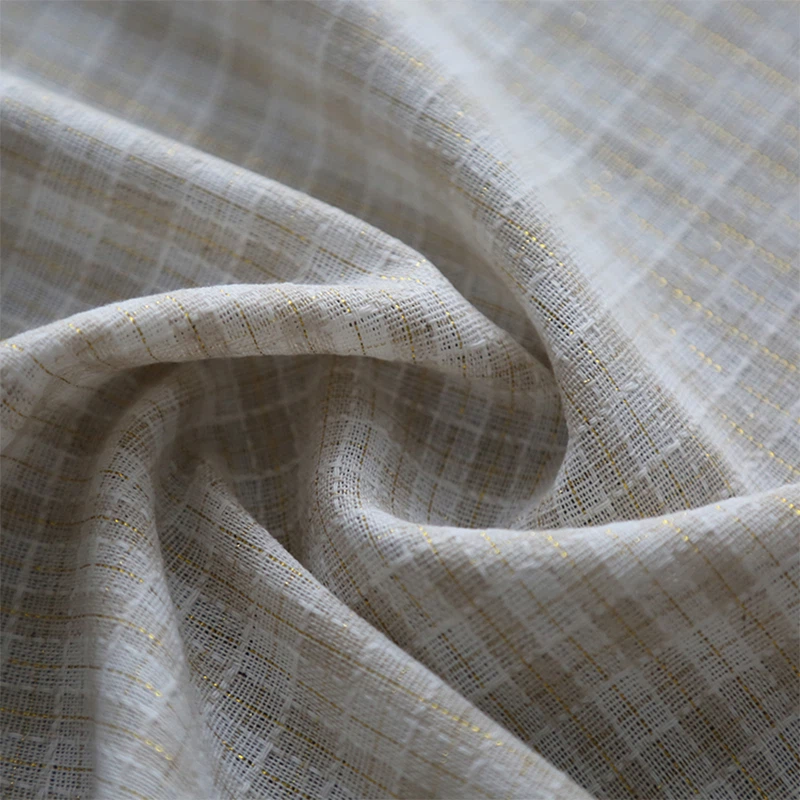
The surface smoothness of a fabric refers to the evenness and lack of roughness on its outer layer. When it comes to linen spandex fabric, this characteristic is a result of the interaction between the two fibers - linen and spandex. Linen, derived from the flax plant, is known for its natural texture. It has a slightly coarse and rustic feel, which gives it a distinct charm. On the other hand, spandex, a synthetic elastomeric fiber, is extremely smooth and stretchy.
When these two fibers are blended to create linen spandex fabric, the spandex component plays a crucial role in enhancing the surface smoothness. Spandex fills in the gaps between the linen fibers, reducing the overall roughness and creating a more uniform surface. This combination results in a fabric that has the breathability and natural look of linen, along with the smoothness and stretchability of spandex.
Factors Influencing the Surface Smoothness
Fiber Quality
The quality of both the linen and spandex fibers used in the fabric production significantly impacts the surface smoothness. High - quality linen fibers are finer and more uniform in diameter, which contributes to a smoother surface. Similarly, premium spandex fibers have better elasticity and a more consistent structure, enhancing the overall smoothness of the blend.
Blending Ratio
The ratio of linen to spandex in the fabric is another important factor. A higher proportion of spandex generally leads to a smoother surface. However, too much spandex can reduce the natural characteristics of linen, such as its breathability and absorbency. A well - balanced blend, typically around 80 - 90% linen and 10 - 20% spandex, can achieve an optimal combination of smoothness and linen's inherent qualities.
Weaving and Knitting Techniques
The method of fabric construction also affects the surface smoothness. Different weaving and knitting patterns can create varying levels of smoothness. For example, a plain weave or a fine - gauge knit can produce a smoother surface compared to a more complex or open - weave pattern. The tightness of the weave or knit also matters; a tighter construction usually results in a smoother fabric.
Finishing Processes
After the fabric is woven or knitted, various finishing processes can be applied to improve its surface smoothness. These include processes such as calendering, where the fabric is passed through heated rollers to flatten and smooth the surface. Chemical treatments can also be used to soften the fabric and reduce roughness.
Implications of Surface Smoothness in Different Applications
Apparel
In the fashion industry, the surface smoothness of linen spandex fabric is highly desirable. For clothing items such as shirts, dresses, and pants, a smooth surface provides a more polished and comfortable look and feel. It allows the fabric to drape well, enhancing the overall aesthetic of the garment. Additionally, a smooth surface reduces friction against the skin, making the clothing more comfortable to wear for extended periods.
Home Textiles
Linen spandex fabric is also used in home textiles, such as curtains and upholstery. The smooth surface of the fabric gives these items a more refined and elegant appearance. It also makes the fabric easier to clean and maintain, as dirt and dust are less likely to adhere to a smooth surface.
Sports and Activewear
In sports and activewear, the smoothness of linen spandex fabric is essential. It allows for a full range of motion without any irritation or chafing. The fabric's stretchability, combined with its smooth surface, makes it ideal for athletic clothing such as yoga pants and running shorts.
Comparison with Other Linen - Blended Fabrics
When compared to other linen - blended fabrics, such as Hemp Cotton Blended Fabric, Golden Jacquard Linen Poly Fabric, and Organic Linen Poly Fabric, linen spandex fabric stands out in terms of surface smoothness. Hemp cotton blended fabric may have a coarser texture due to the nature of hemp fibers. Golden Jacquard Linen Poly Fabric, with its jacquard pattern, may have a more textured surface. Organic Linen Poly Fabric may have a different feel depending on the specific properties of the polyester used.
Maintaining the Surface Smoothness
To maintain the surface smoothness of linen spandex fabric, proper care is essential. It is recommended to wash the fabric in cold water with a mild detergent to prevent shrinkage and damage to the fibers. Avoid using harsh chemicals or bleach, as these can roughen the surface. When drying, it is best to air - dry the fabric or use a low - heat setting in the dryer. Ironing the fabric on a low - heat setting can also help to restore its smoothness.

Conclusion
The surface smoothness of linen spandex fabric is a result of the unique combination of linen and spandex fibers, along with various production factors. It offers a range of benefits in different applications, from apparel to home textiles and sports wear. As a supplier of linen spandex fabric, I am committed to providing high - quality products with optimal surface smoothness.
If you are interested in our linen spandex fabric or have any questions about its surface smoothness or other properties, I encourage you to contact us for further discussion and potential procurement. We are always ready to work with you to find the perfect fabric solution for your needs.
References
- Textile Institute. "Handbook of Textile Fibres." Woodhead Publishing, 2016.
- Horrocks, A. R., & Anand, S. C. "Fibre Science and Technology." Woodhead Publishing, 2012.
- Postle, R. "Fibre to Fabric: An Introduction to Textiles." Pearson Education, 2003.